NPC Archetypes Voiceover Guide
NPC Voice Acting: Nuance in Role Function
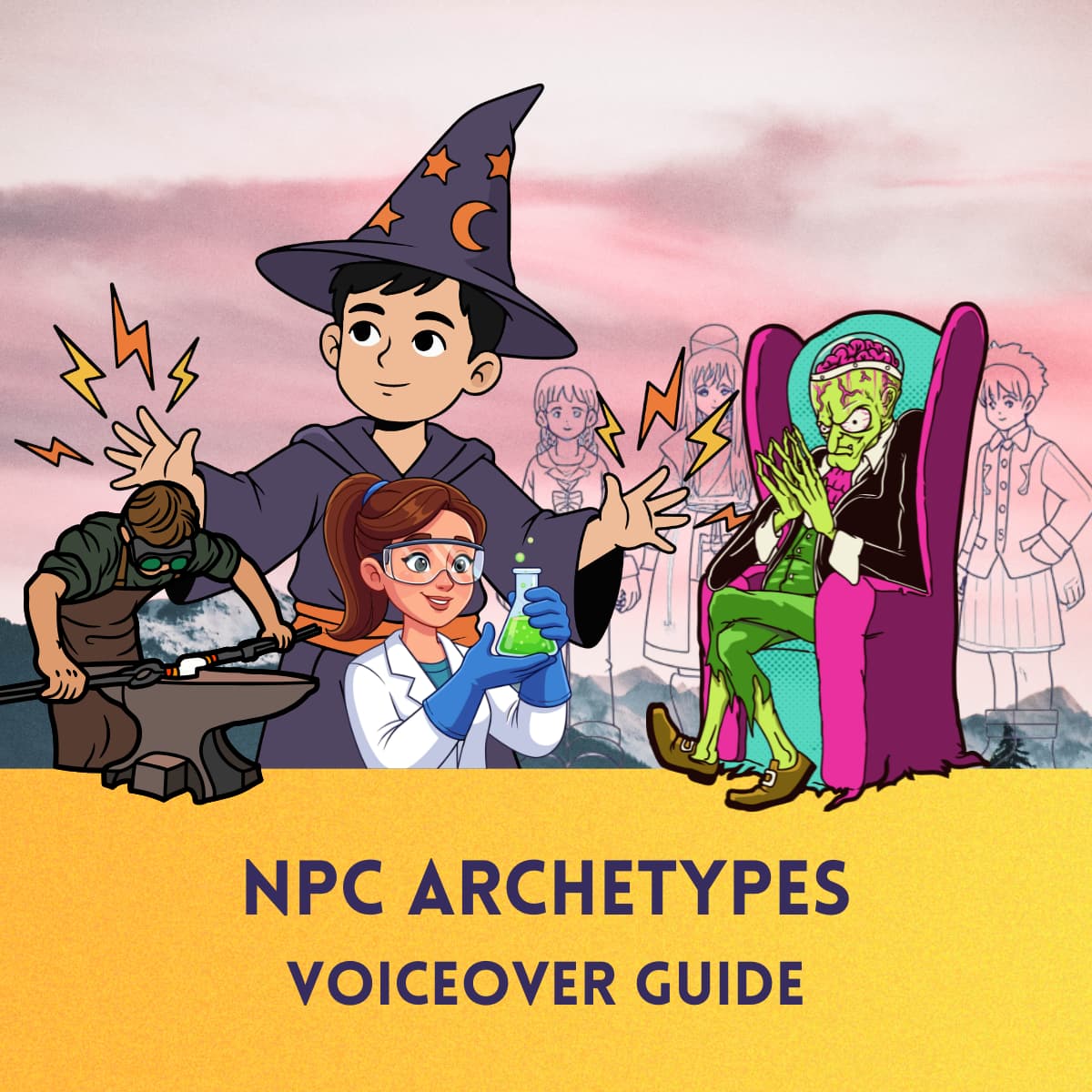
Non-Player Characters (NPCs) are the backbone of any gaming world, providing everything from world-building flavor to essential gameplay mechanics. Generally, they fall into four primary categories, each with subcategories. For NPC Voice Acting, it is important to understand the function of each character in a video game as well as the direction for that character. Context is always crucial for voiceover, especially in video games.
1. Narrative & Progression NPC
These characters are essential for moving the story forward or teaching the player how to play.
- Quest Givers: The classic exclamation point characters. They provide objectives, rewards, and the primary motivation for exploration.
- Plot-Critical NPCs: Characters essential to the main storyline. They often cannot be killed to avoid breaking the game; and provide crucial exposition. How these characters develop or change as the situations and storylines change can be the secret sauce to a game. More on that later in another post examining NPCs and AI that looks at set characters vs. adaptive characters.
- Tutorial Guides: Often found in the opening hours, these NPCs explain mechanics, controls, and world lore, often with good ol’ storytelling.
2. Functional & Economy Characters
These characters exist to manage the player’s resources and gear. You can’t shake capitalism, especially when colonizing Planet Xerevov X!
- Vendors/Merchants: The shopkeepers who buy your loot and sell you upgrades, potions, or weapons.
- Blacksmiths/Crafters: Specialists who repair equipment or use raw materials to create new items for the player.
- Bankers/Storage NPCs: Common in MMO (Massively Multiplayer Online) games, these characters manage the player’s inventory and currency.
When appropriate for NPC Voice Acting, I try to focus on how these characters have real jobs and have been working all day, even if they haven’t had a lot of customers. How would you feel if you were making battleaxes 24/7/365 and had to deal with ungrateful player characters who get to traverse all over the persistent world, while you’re stuck in a crummy village with no Wi-Fi? Take that cash money and run with it!
3. Social & Environmental Non-Player Characters
These characters are often referred to as “flavor” NPCs; they make the world feel inhabited, vibrant, and worth spending time exploring!
- Ambient/Crowd NPCs: These characters populate cities or streets. They might have a few lines of “barks” (short phrases), but they generally don’t have deep interactions. For more on barks, I recommend looking at video game barks from the writer’s POV that illuminates challenges in delivering barks for the voice actor.
- Townspeople/Villagers: Often provide world-building lore or rumors that lead to side quests. These can get lengthy. I once played an innkeeper who had a drawn out discussion and full-on brawl with the lead player character. It was early in the game, so the nuance of the NPC function was to teach the PC how to fight, and deal with characters who suddenly become violent. Warming up the Fight or Flight reflexes.
Just like in movies, a hero or anti-hero interacting with the locals provide the best scenes. Think of “No Country for Old Men” as one of so many examples. In playing these characters, it’s not just a question of “what’s my motivation” but “why am I here to help develop the player character?”
4. Combat & Utility: Your Sidekicks and Tormentors
These characters interact directly with the player’s gameplay loop, either as allies or obstacles.
- Companions/Followers: NPCs that travel with the player, assist in combat, and often have their own unique storylines or “loyalty missions.”
- Minions/Mobs: The standard enemies found throughout the world. They exist primarily to be defeated for experience or loot.
- Summoned NPCs: Temporary allies called into a fight via a spell or item to help the player overcome a difficult challenge.
Then, ultimately, there are the Bosses: Unique, high-powered NPCs that serve as the climax of a level or story arc, usually requiring specific strategies to defeat. Often, these villains are the real stars of the video game. For more about villains, I detail Ten Villain Types for Voice Over here. I love NPC Voice Acting for Bosses!
Listen to the NPC Storytellers in Your Video Games
NPC archetypes provide players with a familiar framework to navigate complex stories. However, it is the subtle subversions of the archetypes and the depth of voice acting performances that breathe life into them. As developers and writers continue to push the boundaries of interactive storytelling, the most memorable characters will always be those that honor their archetypal roots while offering a glimpse of something unexpectedly human. Next time you wander through a virtual town, take a moment to listen to the stories being told in the margins. You might just find that the most impactful figures are the ones you weren’t originally looking for.