Generational Voice Over Styles
The Four Post-WW2 Generational Voice Over Styles
What are the defining characteristics of Gen Z, Millennial, Gen X, and Baby Boomer generational voice over styles, especially in commercials and voice acting characters?
Here’s a breakdown of how these styles play out in practice:
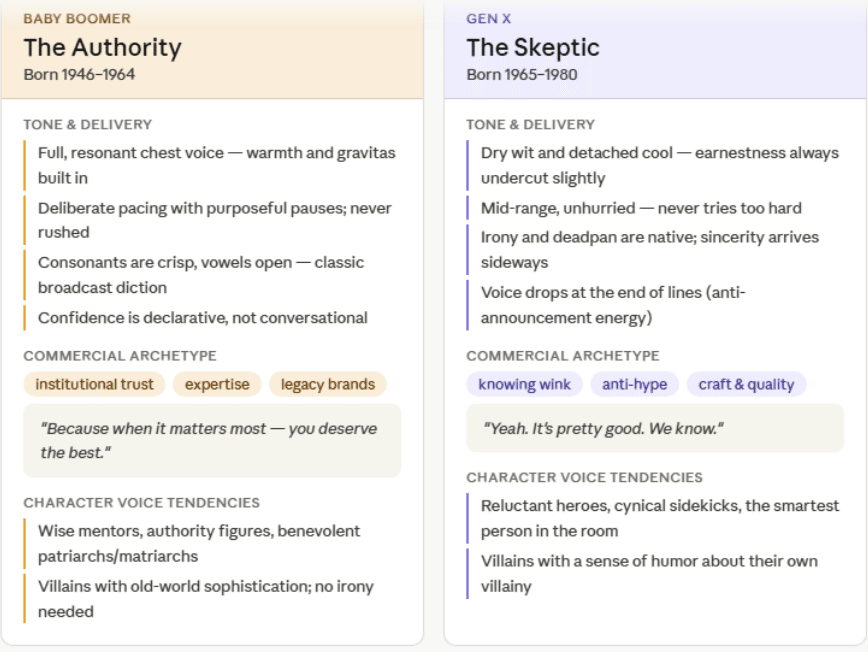
Baby Boomers: The Authority
Baby Boomers essentially defined what professional voiceover sounded like for decades. Think old-school radio announcer energy that had full projection, careful enunciation, and authority beyond questioning. Brands like insurance companies, pharmaceuticals, and financial institutions still lean on this voice because it signals trustworthiness and institutional credibility. But also, that’s what Boomers now consume! Here in Atlanta an HVAC company uses a Bob Newhart-style voice to interact with its company mascot. It’s brilliant and spot-on for the demographic. Character-wise, they’re your wizards, your wise sheriffs, your “I’ve seen things” narrators of great experience, time-wise. Upon further review, you can’t judge a book by its cover: the Boomers were the first generation of voice actors to take care of their voices. That means that they can still sound young. I personally know Boomers who voiced major Gen Z brands. So, listen up!
Gen X Voice Over: The Skeptic
Gen X is the era of generational voice over styles that killed the hard sell. Or tried to but failed! Their signature is the anti-announcement that delivers information as if they’re slightly too cool to be selling you something. The irony is baked in. Commercials targeting this demographic often have a wry, understated delivery that treats the audience as insiders. Think early Apple ads, craft beer spots, or any brand that wants to seem like it doesn’t try. Gen X was all Mac Guys until they ended up in the movie ‘Tusk’, and now nobody knows what is Gen X anymore. Are they still feral latch-key kids inside? Or are they slowly (nay, quickly) becoming their Boomer parents? Or, both? Gen X Characters tend to be reluctant, sardonic, and quietly competent. Very quietly. Gen X used to buy Apple and craft beer, but are now buying things like Home Improvement goods, items driven by nostalgia, and are always on the lookout for bargain items. So, more like PCs from Costco and Miller. Not that there’s anything wrong with that.

The Millennial: The Relatable Friend
Millennials shifted everything toward conversation and emotional transparency. The “hey, it’s me, a person” energy. Upspeak (rising inflection at the end of phrases) and vocal fry are authentic, but note that they are fading out, quickly. Brands targeting millennials want you to feel like your friend recommended the product, not that you’re being sold to. Currently, Millennials are blowing their paychecks on clothing, tech, and health & beauty products. And oodles of travel. Substantially more than any generation. Check out the check in line next time you go to the airport. Characters are emotionally complex, often anxious but hopeful, and earn their victories. They’re a lot. Sorry, that’s just the sardonic Gen Xer in me rearing its ugly head. For more on Millennial voice over, check out the excellent short video from the talented Tawny Platis “Why Millennials Talk Like That.”
Gen Z voice over: The Unbothered Insider
Gen Z could be the most unique generational group out of the generational voice over styles. Furthermore, I’d say they’re the most interesting, since their story hasn’t been fully written out yet. The defining quality from the perspective of other generations is flatness. Don’t confuse that with coldness. Sometimes, the mouth is close to closed with a nasal resonance. It’s not cold, and it still has vibes for days. Is that cringe to say? It’s a deliberate anti-performance approach that signals “I’m not trying to convince you.” Irony and sincerity exist simultaneously. The cadence comes from TikTok, meme captions, and Discord. Brands that get it right sound like they’re in on the joke without explaining the joke. Gen Z has no laugh track. Never did. Characters feel chronically online, delightfully weird, and weirdly earnest underneath all the detachment. Finally, as Tawny Platis brings up in the video link above, Gen Z sound like their Gen X parents did in the 90s (apparently Millennials didn’t have enough kids). So, put that in your pipe and smoke it! And, Gen Z buy the most online but like to window shop in person, and they are also bargain hunters like Gen X. The most values-driven consumer group.
Each Generation is a New Take on the Previous One
One key line running through the generational voice over styles: each generation’s commercial voice is essentially a rejection of the previous one’s “trying too hard.” They are defined by their experiences, but also by what products they consume, and thus what products they “sell” in commercials even if they think they’re too cool to be out there selling. You can’t discount the effect COVID-19 had on Gen Z, or that The War on Terror had on Millennials. Speaking of past generations and war, stay tuned to an upcoming post about voice over styles before World War 2. Just in time for World War 3! Please comment below with your own ragebait about which generational voice over style you like best. Wrong answers only.