

Importance of Clean Audio for Voice Overs
My job as an American voice over actor has two primary objectives. First, it is to deliver the performance my clients need. The second job is to deliver raw voice over audio files to my clients that are as clean as possible from the start. This gives producers and studios the dynamic range and headroom to process and mix them as they like. I only process audio slightly for some long-term corporate and eLearning clients that told me they do not process on their own. You can read about my processing for eLearning voice overs here. Otherwise, I leave the compression, EQ, etc. to the engineers to make it fit their own sound design.
Below, you’re listening to the RØDE NTG3 shotgun super cardioid microphone. It has the same specs as the Sennheiser MKH 416 in terms of frequency range, self-noise, output impedance, and Maximum Sound Pressure Level. It has a fuller low end than the MKH 416 with a slightly smoother sounding top end, but the same focused presence in the upper midrange. The NTG3 is plugged into a MOTU M2 audio interface. In fact, in the Raw Audio Sample below, I am saying the last four sentences you just read!
There is no processing whatsoever on the raw voice over recorded sample: no High Pass Filter or EQ, no Compression, no Noise-reduction or Gate, and no Normalization or Limiting. The resulting file has peaks from -10 to -6 dB and a noise floor of -68 dB. It is a 48 kHz 24 bit .wav file. Directly below it is the MP3 128 kbps Mono file.
Clean Signal, Clear Acoustics for Voiceover
Raw Voice Over Sample 128 kbps .MP3
Voice Over Sample with Processing
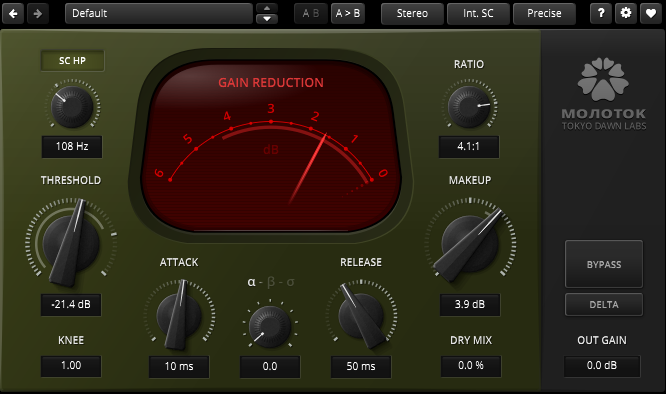
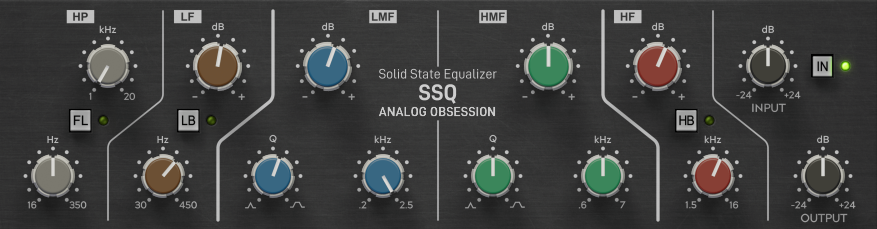
The second version of the voice over sample below is the same audio as the first raw voice over sample; but this time processed with some additive and subtractive EQ from the Analog Obsession SSQ plugin (700 Hz cut, 70 Hz HPF, and a slight boost at 110 Hz). Then, there is 3:1 Compression from my favorite Molotok compressors from Tokyo Dawn Labs. Finally, for some air on the high end, there is the Fresh Air plugin from Slate Digital, with 5% Mid and 7% High settings. Just a touch will do! Also, these are all free plugins for voiceover. You can read more about compression for voice overs here. There is no noise reduction or gate. It is a 48 kHz 24 bit .wav file. The MP3 128 kbps Mono file is directly below it.
Processed Voice Over Sample 128 kbps .MP3

In this processed sample, as well as the raw voice over sample, you can hear the acoustics of my voiceover studio. It’s not just about having raw voiceover samples with a clean signal chain, and a quiet room, but also about having a treated room without far reflections. Another consideration is early reflection points, which unfortunately are a big problem in booths and small recording spaces. My recording area is quite roomy but well treated with bass traps and acoustic panels by GIK Acoustics based here in Atlanta. There are also extra dense sound blankets from Vocal Booths to Go. It gives my voice overs a nice open but controlled sound as opposed to the boxy muddy sound that can come from sound booths. That way, the audio has a high-quality sound: raw or processed.