

The NT1: The Mic that Started RØDE.
The NT1 is the large-diaphragm condenser microphone that launched the RØDE brand. While being an Australian company, the Ø in RØDE is used in homage to founder Peter Freedman’s Scandinavian roots. Where does the NT1 name come from? It is a pun by Freedman for “Rodent-1.” And all this time I thought it meant “No Transformer” as Neumann microphones use “TLM” for “Transformer-less Microphone!” Undergoing several generations since its introduction in 1991, it remains one of the most popular low-cost voice over microphone lines available for home studios. The NT1 5th Generation is the latest in its evolution, featuring a range of advanced technologies and technical improvements over its predecessors. Here is an overview of all seven models of the five NT1 generations, and at the end I have something to say about a consistent issue with the generations that followed the original.
RØDE NT1 1st Generation
The original RØDE NT1 was a large-diaphragm FET condenser microphone known for a warm sound and versatility. It made a significant advancement in affordable microphone technology at the time. It came in a light grey or white matte body, using a Schoeps-based circuitry design from Jim Williams of Audio Upgrades. The mic had rave reviews from Sound on Sound and other audio magazines in the 1990s. Peter Freedman himself said in an interview with AudioTechnology that the NT1 was born from modifying Chinese U87 knock-offs with quality components. Once they became good at that, they started building the whole microphone themselves in Australia. The mic was such a good interpretation of the U87 that Neumann told them to knock it off. They stopped making them and moved on to making the NT2 and the now famous next mic in the line.
RØDE NT1-a: Something Different
Released in 2003, The NT1-a introduced a whole new sound for RØDE. The mic has a bright top end which sounds great on breathy or higher pitched voices. It comes in a silver body, much like their top-line microphones such as the NTK or the NT2000. Most significantly, it lowered the self-noise to an astonishing 5 dBA, making it great for voice overs in that regard. However, if you’re prone to sibilance, it might not be the best choice for your voice. It was the first microphone I bought for voice over. While I do not own it anymore, I still use the NT1 4th Generation and NTG3 regularly. And for some projects (telephony, eLearning, podcasting, and villainous character voice acting with yelling) I use the RØDE Procaster dynamic mic, which I also highly recommend.
RØDE NT1 2nd and 3rd Generation
The NT1 2nd generation had improved circuitry and a smaller body from the original NT1 model. The 3rd Generation had more circuit improvements and a new capsule. They still sounded similar to the original NT1 as you can hear from this voice over sample on this thread from Gearspace. Sounds great, and people still mod them with new capsules since their circuitry is so good.
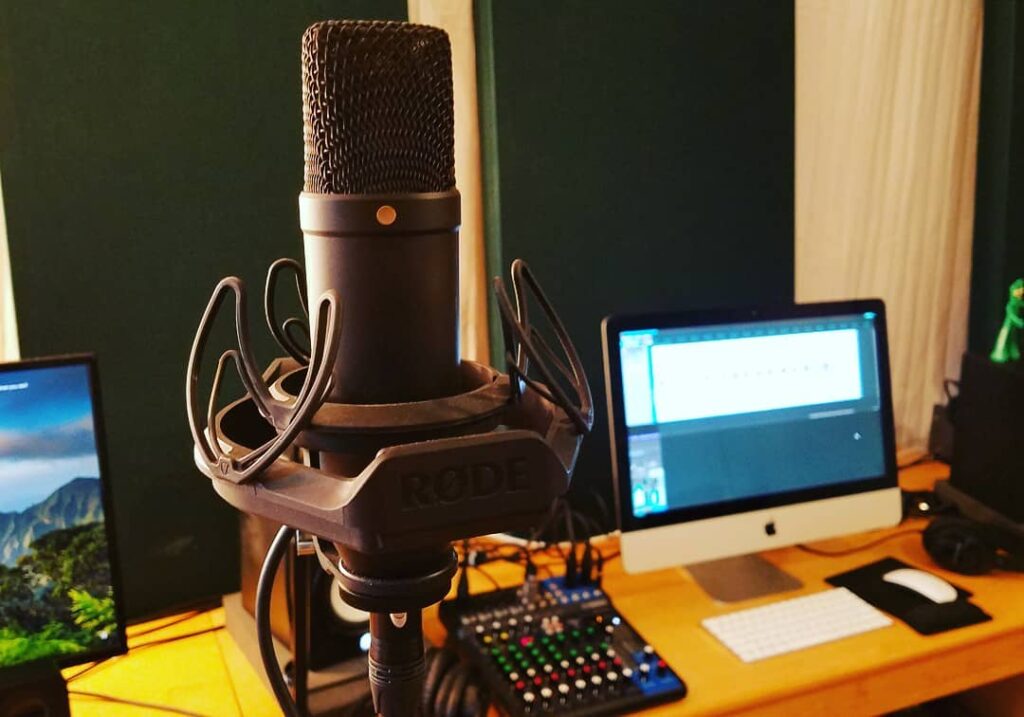
RØDE NT1 4th Generation: Back in Black
Ten years after the NT1-a, the all-black NT1 4th Generation was released. It isn’t bright like the NT1-a. It isn’t a warm mic like the original NT1. It’s a very flat transformerless microphone with an even lower self noise of 4.5 dBA. As a result, it has an astonishingly good Signal-to-Noise Ratio of 90 dB. Among common voice over microphones, only the TLM 103 comes close to it at 87 dB. It has a JFET impedance converter with a Maximum Sound Pressure Level (Max SPL) of 132 dB. It is the first RØDE mic with the HF6 capsule. Both the 5th Generation and 5th Generation Signature Series microphones have this same capsule.
RØDE NT1 5th Generation: USB and XLR in One Mic
Another ten years later, the NT1 5th Generation was released in February 2023. It has the same capsule as the 4th Generation, and lowers the self noise to 4 dBA. However it is very slightly brighter on the top end, just enough to notice. Like the 4th Gen, it has a JFET impedance converter but with a greatly improved Maximum Sound Pressure Level (Max SPL) of 142 dB. That’s 10 dB more loudness it can handle! Even more noticeably, there are several technological additions and improvements. There is a Dual Connect output for XLR or USB. It has an internal preamp with a 32 bit digital float output to avoid clipping, and Aphex digital processing. The NT1 comes in black with a silver grille or all silver, like an NT1-a.
RØDE NT1 5th Generation Signature Series
In November 2023 the NT1 5th Generation Signature Series microphone was released. It is their lowest-priced large condenser microphone ever. It also comes in ten snazzy colors to match your branding or studio vibes. There is no USB preamp or onboard processing. However, I would recommend this mic for voice over as it is just slightly brighter than the standard 5th generation but not as bright as an NT1-a. And yes, it too is a JFET mic with an amazing 4 dBA self-noise and an improved 142 Max SPL.
The Signature Series comes in black, blue, green, orange, pink, purple, red, yellow, cobalt, and white.
In the End, the Capsule Just Isn’t Good Enough
Remember earlier when I wrote about the 2nd and 3rd Gen “people still mod them with new capsules since their circuitry is so good.”? Well, that’s the problem with most RØDE mics: the capsules aren’t that good, even for the price. You’re better off with low-end offerings from Lewitt, AKG, and sE Electronics. The RØDE body manufacturing and circuitry are excellent, which justifies the low cost. However, capsules are critical, and RØDE simply does not make good Large Diaphragm Condenser microphones because their capsules aren’t good.
They do, however, make two excellent shotgun microphones for voice: the NTG3 (which I often use) and the NTG5 that both sound like a beefier MKH 416. They also make the superb Procaster dynamic microphone which is brighter than a SM7b but not as brittle as EV dynamics. Honestly, when you process a Procaster into a mix it sounds much better than any RØDE LDC mic like the NT1, NT1-a, NT1000, NT2000, or NTK. Those are all very harsh on the top end. Maybe they should stop trying to make a RodeNT mic and make a Not Rodent mic. However, they seem content on selling more cheaper mics than improving the capsule and selling it for slightly more. I can respect that, businesses have to do what they think works, and this approach meshes with marketing to content creators and podcasters. However, I wish they had also made a few $300 – $500 microphones with better capsules and retired their old lines because nobody respects those anymore. Nice build, good circuitry and hot output with low noise only gets you so far. If it doesn’t sound good in a mix due to harsh highs, flabby mids, and muddy lows, it’s unusable.